

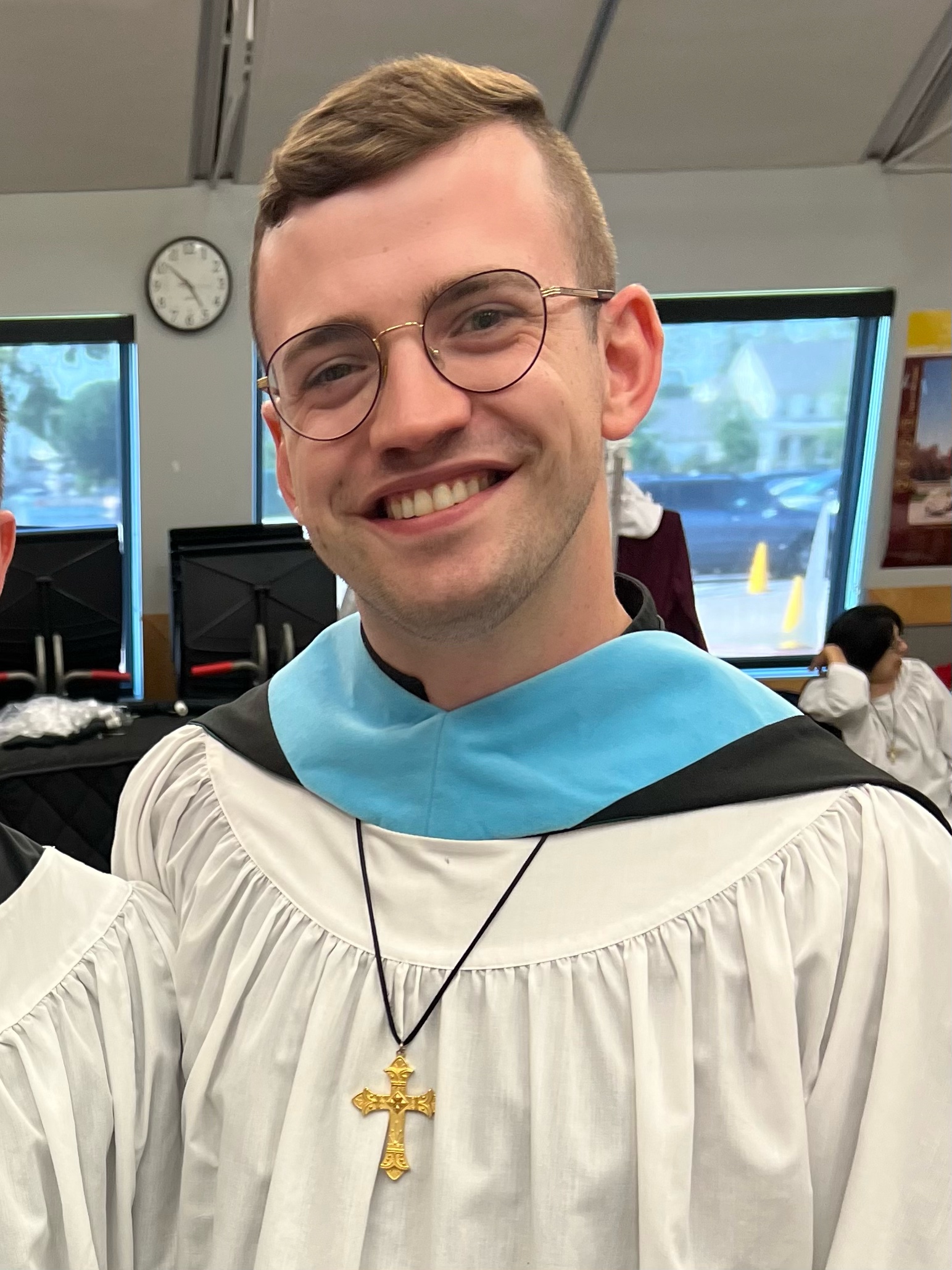
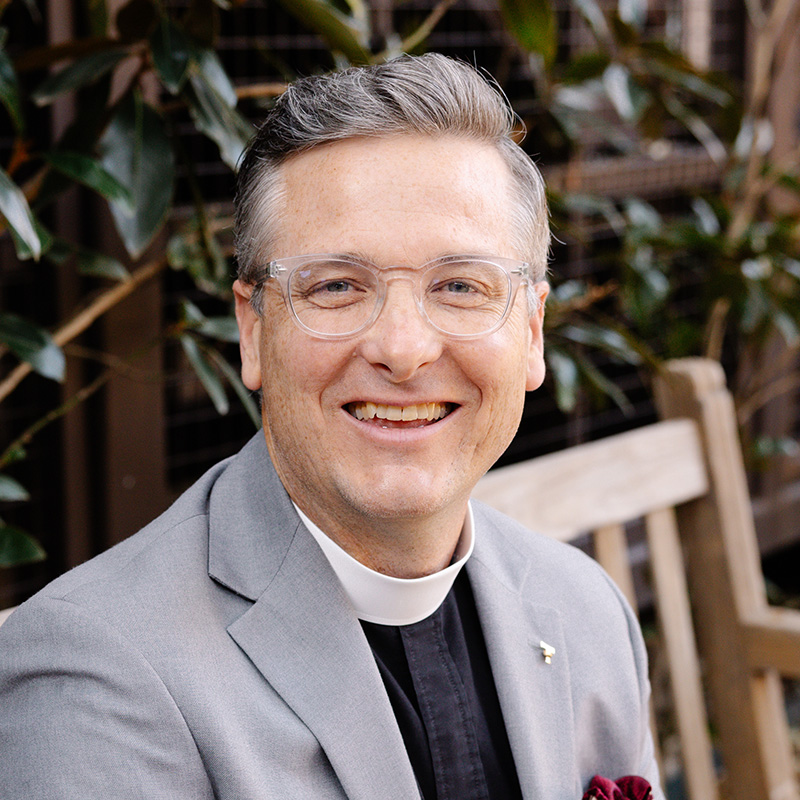
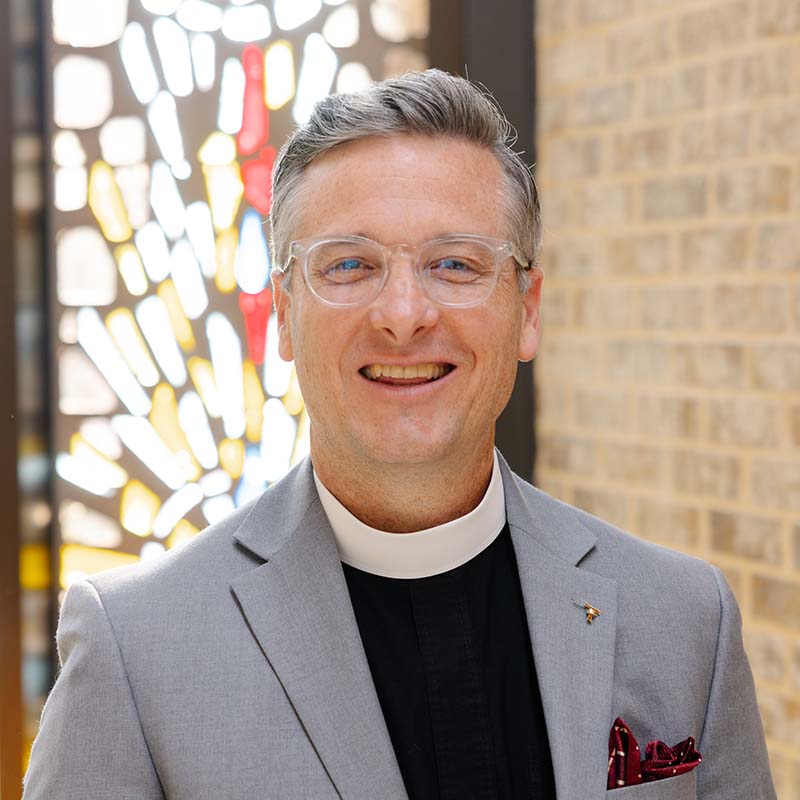
By Marcus Garrott
In honor of July as Disability Pride Month, this week we welcome a reflection on the connection between disability and faith from Fig member Marcus Garrott.
Like many of us, I feel at home at Transfiguration because we take seriously our promise to seek and serve Christ in all persons—not because we follow cultural winds, but because we follow Jesus.
July is Disability Pride Month, commemorating the July 1990 passage of the Americans with Disabilities Act (ADA). By celebrating the unique identities, culture, and contributions of disabled people, it affirms disability as a beautiful and indispensable part of human diversity.
This is significant to me because I'm proudly autistic. My autism shapes everything about my identity, my relationships, and even my faith in ways that I cherish. But my pride doesn't erase the very real experience of being disabled, even if my challenges are largely invisible to most people.
Throughout his ministry, Jesus gave particular attention to disabled people. Disability theologians tell us he healed people not to eradicate disability, but to restore dignity and autonomy and reintegrate disabled people into a society that was sinfully unwilling to accommodate or include them.
All three synoptic gospels record the story of a paralyzed man who was unable to access a crowded home where Jesus was teaching in Capernaum. Some people responded by digging a big hole in the roof and lowering him down right in the middle of things. What a disruption it must have been to all the non-disabled folks, and to whoever had to fix it later! They went to extreme lengths to make accessible the place where Jesus could be experienced. And Jesus saw that as impressive faithfulness. So he healed the man and told him to pick up his cot—and his autonomy—and walk home.
I often talk about the theological experiment of imagining Jesus as autistic like me. Autistic people often struggle to intuit and conform to social expectations, and we're often gifted with a strong sense of justice that seems a little intense to others. Unfortunately, this combination often leads to misjudgments, alienation, or even violence. So, it's not unreasonable for autistic people to sense a kindred spirit in our fully-human Savior, who didn't seem very concerned with the social and religious rules that, if followed, would've protected him from hostility and harm.
Theologian and sociologist Nancy Eiesland's 1994 book, The Disabled God, is the foundational text of disability theology. She argues that the resurrected Christ retained the crucifixion wounds in his hands, feet, and side, thereby dismantling the assumption that the ideal image of God is non-disabled and fully independent. As Archbishop Desmond Tutu taught us during his visit in 2006, God made us different from one another "so that [we'd] know our need of one another." So, disability is neither a punishment for sin nor an intrinsic tragedy, but a glimpse of the interdependent nature of God, who made us all "very good."
Clearly, Christianity has the potential to be a very disability-affirming religion. But we don't always live up to our potential, do we? In fact, as a result of aggressive Christian lobbying, churches are exempt from nearly all building accessibility and employment non-discrimination requirements of the ADA. And conservative evangelicals were among the Act's fiercest opponents, because they didn't want protections for HIV-positive people.
At this moment, disability rights and public supports are increasingly under attack. The Secretary of Health and Human Services seems more interested in conspiracy theories than science. The Department of Education has farmed out their legal responsibilities to protect the rights of disabled students. People on disability can still lose their benefits if they get married. And it's still legal to pay disabled people sub-minimum wages.
Given this, what will our Christian witness look like? What do our physical spaces, policies and norms, social activism (or lack thereof), and theological teachings reveal about our beliefs concerning disabled people? As part of our last capital campaign, Transfiguration invested in a new assistive listening system, ramps, and pews designed to accommodate mobility aids—showing our disabled members and visitors they belong in the nave, at the ambo, and even at the altar. It's a regular occurrence to see wheelchair users in our procession and Mass responses signed in ASL. We are already showing incredible faithfulness here.
So, friends, let us keep following Jesus. Let us stand in solidarity with disabled people in concrete ways, listen to them when they tell us what they need, and have enough faith to go to extreme lengths. Let us insist on their dignity and autonomy, and help tear down every barrier to their full belonging in society and in the family of God.
Marcus
Marcus Garrott came to Transfiguration in 2019, and he is a member of the Transfiguration Choir. For more information about Disability Pride Month, visit https://disabledepisco.com/
Previous Articles
October 8, 2026
October 2, 2026
September 25, 2026
September 18, 2026
September 11, 2026