

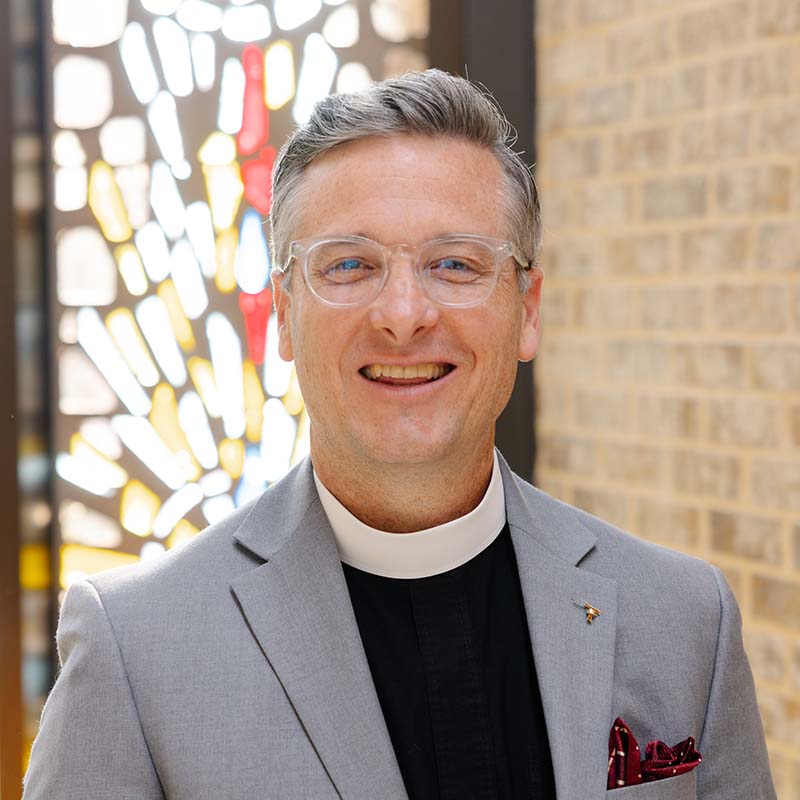
By Father Casey
There is something about music that is able to penetrate both the human mind and soul at the same time. Music enters through the head but lodges in the heart, in a way that other things we encounter in life do not. Consider how little we can remember from our early childhood, but how easily we can still sing along with songs we sang in kindergarten. Or consider how just a few notes of the Jaws theme makes your skin crawl, and a few notes from The Lord of the Rings score makes you pine for home. Or consider how music, like nothing else, is able to soothe someone as they journey through their final days of life. They may be struggling with pain or losing touch with reality, but a beloved piece of music can work like a magician's snap.
Music is a huge aspect of our life at Transfiguration. We are a congregation of musicians and music-lovers. We are home to five choirs, a chamber music concert series, three organs (one is a WW2-era pump model), two harpsichords, and numerous pianos. The Transfiguration Choir is comprised of nearly 50 volunteer singers, including music educators and choir directors who could be paid somewhere else. Hardly a week goes by that I don't meet a visitor who mentions that they'd heard about our music program and wanted to experience it in person. I am deeply grateful for the direction of Joel Martinson, who has elevated our program to great renown in the Episcopal Church, and so, too, am I thankful for our congregation-wide commitment to creating beauty that gives glory to God.
One of my favorite things about music at Transfiguration is our embrace of hymnody. We embrace the whole collection of The Hymnal (1982), rather than leaning on a smaller set of familiar songs. There is certainly something to be said for singing music everyone already seems to know, but there is also something important about reaching deeper into the tradition to sing things that may be less familiar but are no less spiritually potent. In this regard, I'm not only speaking about the tunes – the melodies and harmonies – though that is a big part of it. I'm also talking about the texts of hymns, and the way we sing words written by a wide range of people from across nearly two thousand years of Church history.
When I was young, I enjoyed singing the hymns I already knew, but I didn't give much effort to the hymns that I didn't. I figured that if I didn't already know it, and especially if I didn't love the tune, then it wasn't really "for me." But as I've matured (at the very least in years), I've come to appreciate how our hymnal is a fabulous collection of poetry. There is extraordinary spiritual wisdom in these texts! I can think of many times when we've sung a hymn sometime after my sermon, and I realized that the text said far more beautifully and succinctly what I had just spent fifteen minutes trying to say. So if we choose to stare off into space during an unfamiliar hymn, and not bother looking at the text let alone sing along, we are forsaking an opportunity to experience the inspiration of spiritual masters and gifted poets.
Let me offer an example. Just last Sunday we sang Hymn 424, "For the fruit of all creation." The tune, East Acklam, is certainly lovely, though admittedly less familiar, so it would be tempting to leave the hymnal in the rack and not bother to pay attention. But in so doing, you would lose the chance to meditate on these words by Pratt Green (1903-2000):
For the fruit of all creation,
thanks be to God.
For his gifts to every nation,
thanks be to God.
For the plowing, sowing, reaping,
silent growth while we are sleeping,
future needs in earth's safekeeping,
thanks be to God.
In the just reward of labor,
God's will is done.
In the help we give our neighbor,
God's will is done.
In our worldwide task of caring
for the hungry and despairing,
in the harvests we are sharing,
God's will is done.
For the harvests of the Spirit,
thanks be to God.
For the good we all inherit,
thanks be to God.
For the wonders that astound us,
for the truths that still confound us,
most of all, that love has found us,
thanks be to God.
Where else in our daily lives do we ponder such things? When else are we handed poetry like this and invited to consider it, let alone sing it? When else are we given the gift of such beauty to inspire our prayers and lift our hearts? This is poignant and powerful theology – of nature, of justice, of providence, of love – all rolled into three exquisite little verses. Are you going to hear the tune on the Christian radio station on the way home? No. Will this be among the hymns you request for your funeral? Probably not.
But if we really do become what we pray (lex orandi lex credendi), and if in singing we pray twice, as the old saying goes, then let's sing such things as this! And if you are among those for whom singing is awkward, at the very least pick up the Hymnal and read along with all this gorgeous and prayerful poetry. It will do a soul much good.
Casey+
Previous Articles

October 8, 2026
October 2, 2026

September 25, 2026
September 18, 2026
September 11, 2026