

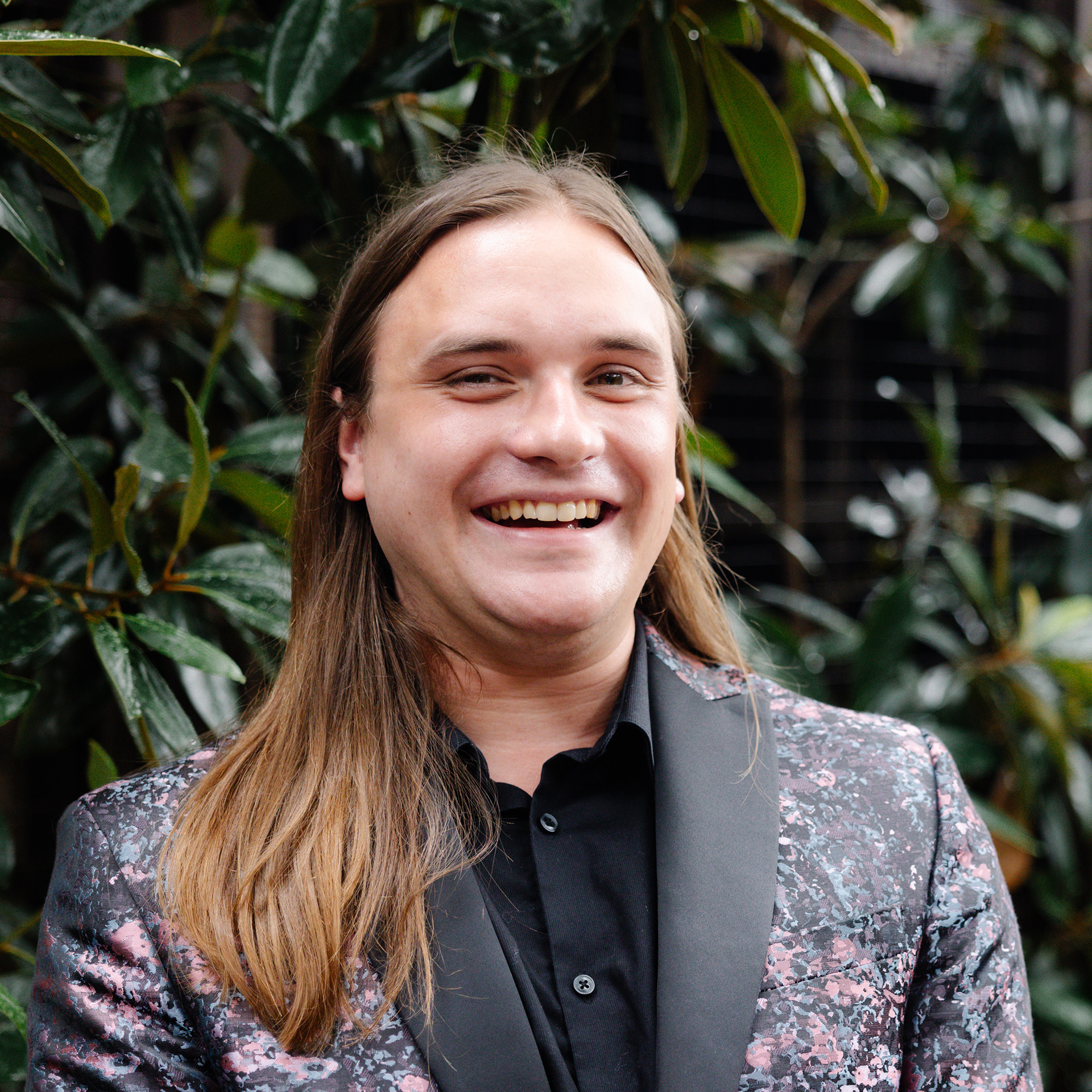
By Bailey Roberts
When I decided to study theology, I had never read the Bible. Heck, I had barely even darkened the door of a church. I was critical, reckless with my doubt, and deeply skeptical of those who labeled themselves as Christians. Yet, I remained curious.
My first class on theology didn't begin with scripture. In truth, we didn't open a Bible in that class at all. Rather, we read the likes of Walter Brueggemann, Paul Tillich, Mary Daly, James Cone, etc. The earliest glimpse of what would become my Christian faith was grounded in liberation, systematic, and academic theologies. Those traditions became the lens through which I would eventually approach the Bible. My Christian faith began with how others imagined it to be. I read the Bible in bits and pieces through others' interpretations. As you can imagine, I thought I knew everything after that first year of college.
Growing up, I had a wild imagination. On occasion, my Nana likes to remind me of the ways I structured and ordered the world I carefully created and lived in. At pre-school age, I would assign her specific roles and parts, curating a story that would unfold in real time. She laughs about it now, remembering every detail and telling me about it whenever I see her (it's been almost three years, so some storytelling is overdue). In time, that imaginative participation slowly started to be internalized. In my middle school years, I would run all over the house, acting out these scenarios in my head. I'd write stories, draw maps, paint pictures, and play dress-up, but it became more of a one-man show. In my adult years, much of that childlike imagination slowly began to dissolve. School stress, bouts of intense depression, anxiety, and simply growing up, blurred the joy of creating and playing because I had no time to. I suffered. But I found God in that suffering. I learned how to imagine again.
The genesis of my Christian imagination is twofold. First, I attended a candlelight evening prayer on a Sunday evening in April of 2018 at the Chapel of the Resurrection at Valparaiso University. I remember sitting by the aisle and sneaking a picture of the Christus Rex behind the altar before the procession began. I went alone, curious and hungry for the substance of that which I had been studying for two years. I needed to put the pieces together. How I'd do that, I didn't know yet. What I did know was that I was in awe. At the end of the service, I sat there by myself in the stillness of the empty chapel and thought, "So church can look like this?"
Second, every year for my birthday, my grandpa, or Poppa, would get us tickets to see a musical in Chicago. It was a whole affair; we would drive in, get a nice dinner, and then walk to the Civic Opera House. The last show we saw together was in that same spring of 2018. We went to see Jesus Christ Superstar. And for some reason, in that theatre, piggybacking off a spectacular church service, that's when it all made sense. Tradition and imagination collided, and I found myself thinking, "So this is what Christianity can look like?" The next day, I walked into University Pastor The Rev. James Wetzstein's office. I told him, "First, I have some questions. Second, I want to be baptized." I have a habit of catching people off guard when God is calling me to do something.
Pastor James and I spent the summer and early fall reading the Gospel of Luke together. I read from a copy of the RSV that was gifted to my dad on his first birthday in 1971. It was the first time I read anything from the Bible all the way through. I inwardly digested, wrestled, and asked questions I didn't know I could ask. I got to imagine through Lectio Divina and place myself in the story, to smell, taste, and see. I was baptized on September 2, 2018, at the Chapel of the Resurrection, surrounded by some of my professors, family, and friends.
Imagination continues to play a pivotal role in my Christian faith and witness, and I hope it does in yours as well. I get to encounter that "aha!" moment in 2018 every day, especially among you all on Sunday mornings. God, in his infinity, remains unchanging. And in that unchanging nature is room for all kinds of imagination. The ways we encounter God are limitless. In today's Daily Office Old Testament reading, God tells Moses to break open a rock that shall give forth water (Num 20:1-13). I think of Matthew 16:18, where Jesus tells Peter that his church will be founded upon a rock. God, through the Church, pours out his abundance like water. We are invited to drink of it. We are invited to imagine.
So no, when I decided to study theology, I had never read the Bible, nor darkened the door of a church. But I learned how to wrestle, and I learned how to doubt faithfully. More importantly, I learned how to call myself a Christian. I learned how to imagine, how to create my own lens through which I encounter my faith. I learned that imagination isn't a one-man show. Imagination, like the Christian religion, is communal. I kneel before God's table with you all every Sunday, to share a meal together, and to imagine together. The future of the Christian faith and its Church is limitless, because people like us constantly imagine what it can be.
Bailey
Previous Articles

October 8, 2026
October 2, 2026
September 25, 2026
September 18, 2026
September 11, 2026