

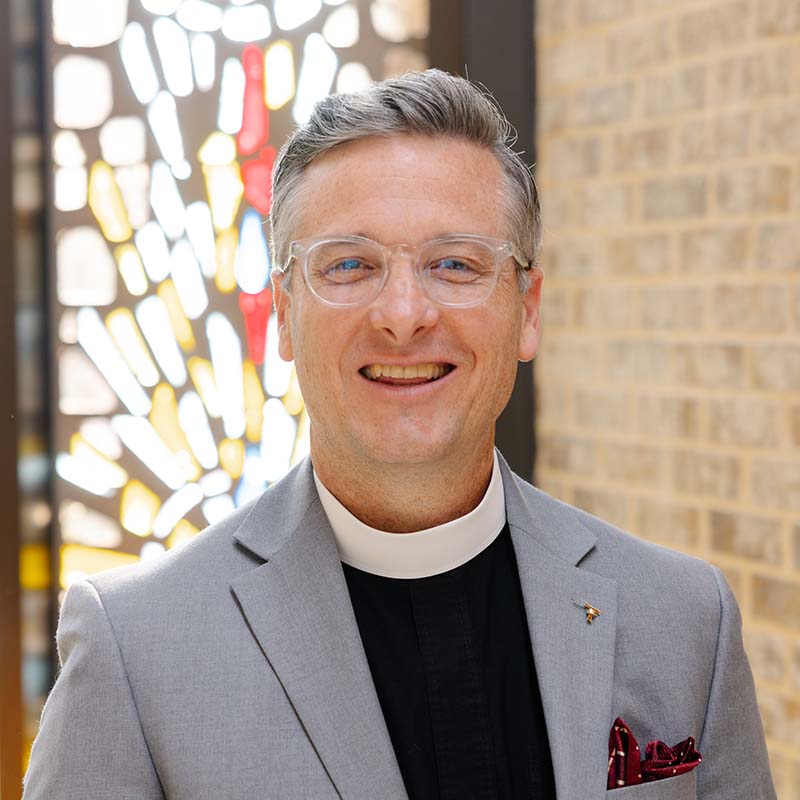
In my twelve years as rector, I can't remember such a strong response to one of my Friday messages!
Last week I shared with you the directive given by Bishop Price that we would no longer be able to use the expansive language rites for our weekend celebrations of the Eucharist. Anglo-Catholic parishes using alternative rites were similarly restricted. The bishop's stated intent is to unify the diocese by reducing the diversity of liturgical language used in all the parishes, akin to the era of the very first Book of Common Prayer in the 16th century, when the Church of England sought to bring a divided people together to worship God with a singular volume of prayer.
The expansive language rites, by way of reminder, are the set of Rite II Eucharistic prayers modified by General Convention back in 2018 which reduce the reliance on masculine language for God. So, for example, the words "by him, and with him, and in him" that appear at the conclusion of Prayer A (page 363) were modified to "by Christ, and with Christ, and in Christ." There were a few stylistic changes, too, and a couple that addressed matters of theology (e.g. the removal of the words "and the Son" to describe the procession of the Holy Spirit in the Nicene Creed). These rites were approved overwhelming by the governing body of The Episcopal Church in 2018, and Transfiguration almost immediately adopted them into our regular worship life.
Turns out, many of you have deeply embraced these changes to the prayer book, and our inability to continue using them is a source of great distress. You are a passionate community with deeply held convictions, and to more than a few of you the loss of expansive language feels like a threat to our values and beliefs. We know, for example, that God transcends gender and words like "Father" and "Son" are metaphors revealing a relational reality and not literal descriptors of divine nature. This may be controversial among some of our Christian neighbors, but in this regard, we share the same beliefs of the earliest Church. And so, being required to return to gendered language for God that we had happily set down felt like a tragic loss.
As an Episcopal Church, we are under the authority of our bishop (episcopal coming from the Greek word for bishop), so when Bishop Price directed us to cease from using the rites, I felt it my duty to obey. I also respect his stated intent to foster unity in our oft-divided diocese. Therefore, last weekend we returned to the language of the printed prayer book.
But this past week, Bishop Price announced a partial retraction of the directive. In his message, he acknowledged his mistake in believing he had authority to prohibit the expansive language rites. When they were approved by convention, the resolution was careful to say they did not require bishop's approval, which means he cannot prohibit our use of them. I am grateful to the bishop for demonstrating humility in this, for we have far too much acquaintance these days with leaders who refuse to admit to mistakes.
In his corrective message, Bishop Price recognizes that he cannot direct it but asks that churches choose to honor the "underlying reason for the original prohibition," and use only the liturgical texts of the printed BCP. As a sign of respect and relationship, we will honor this request for now and continue abstaining from the expansive language rites. This isn't a permanent forsaking of rites we are authorized by the Episcopal Church to use, which align with our values, but rather a way to demonstrate our participation in the life of our diocese.
Some of you are no doubt wondering, with so much happening all around us of enormous consequence – wars and violence, elections and injustice, sickness and suffering – why does this little squabble over a few words in our liturgies matter?
It matters because what we say in worship is important.
And it matters because how we disagree as Christians is important.
And it matters because admitting when we make mistakes is important.
And it matters because sacrificing freedoms for the sake of others is important.
We cannot show our messy and hurting world something more beautiful and Christlike if we don't behave with grace and maturity when faced with challenges. As Eucharistic Prayer C, which we will be using for the next few months, says, "Let the grace of this Holy Communion make us one body, one spirit in Christ, that we may worthily serve the world in his name."
See you in church.
Casey+
Previous Articles

October 14, 2026

October 8, 2026
October 2, 2026
September 25, 2026
September 18, 2026