

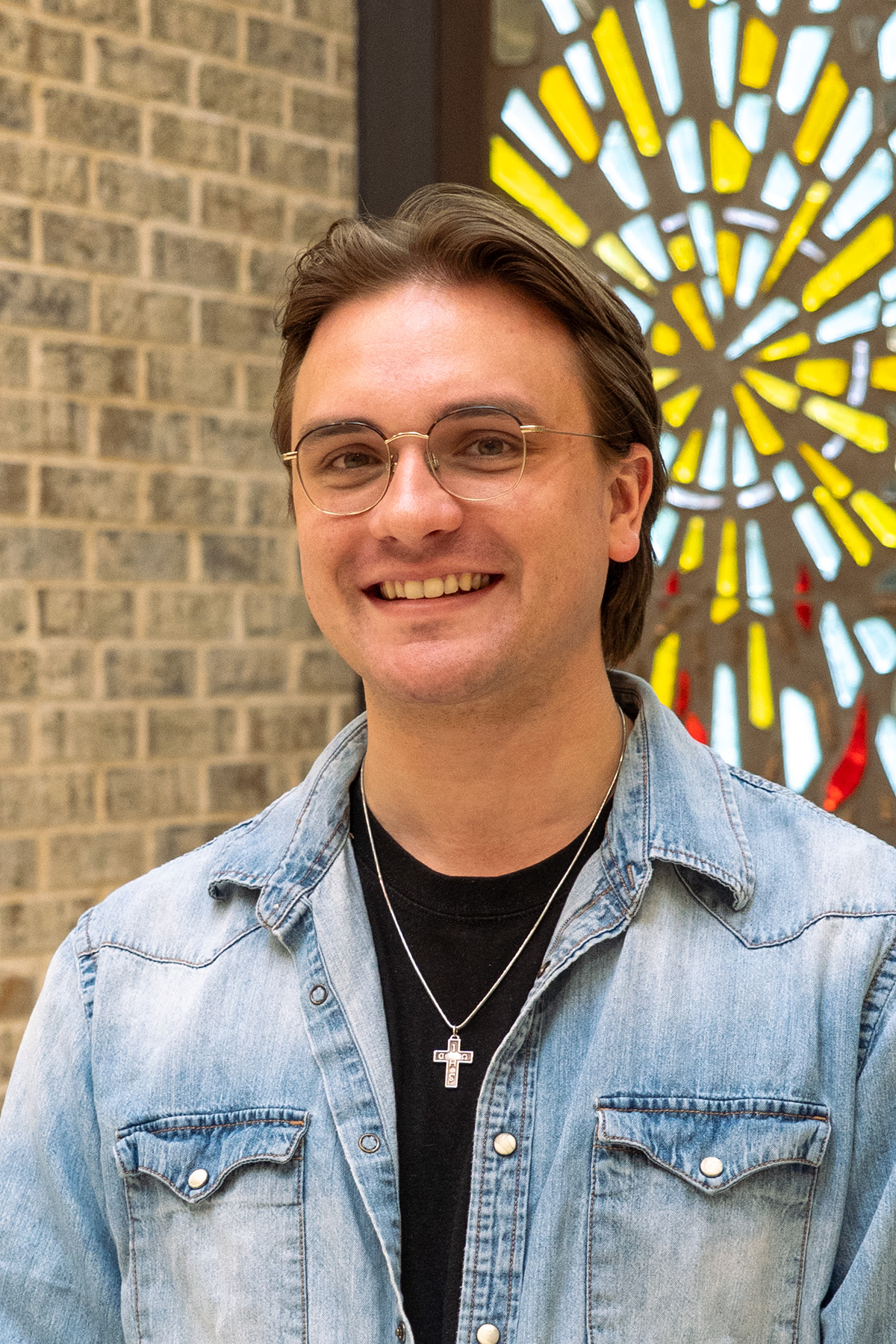
By Bailey Lightfoot
I'm going to start with the one thing I was told never to do when writing an article. And that is starting with a quote;
The organization of practical theology is implicit in the doctrine of the functions of the church… In this way practical theology can become a bridge between the Christian message and the human situation, generally and specially. [1]
Regardless of how Fall may feel in Texas, it's easy to know when the season arrives here at Transfiguration. The energy after the 9am Mass as everyone gathers into various spaces in the Church for their respective formation classes is electric. I look forward to it every year, with every new class cycle as we travel through the Church year together.
Formation is one of the greatest gifts of the Church. In a tense period of which education in the humanities is under threat, the Church has a responsibility to come under it and fill in the gaps those threats have created. Earlier this week, the Trump Administration announced plans to limit access to student loans for those pursuing certain degree programs. The argument being used is in the financial viability of people graduating with those degrees and the investment the government is putting into those individuals.
It may come as no surprise that the bulk of those degree programs fall in the humanities. Among those under threat are degrees in linguistics, music, and religious studies. If you look closely enough, those degree programs make up the Church. In church we worship the Lord in the beauty of holiness with a rich tradition of music and hymnody. We learn how to talk about God and to God with language given and adapted, spoken aloud together, or in private through prayer. Clergy who have devoted themselves to a lifetime of religious and theological study shepherd us. Formation this year feels even more poignant.
Two of the most formative theologians in my life are Paul Tillich and Dr. David O. Woodyard. Tillich was introduced to me by an old professor of mine, Dr. Woodyard, who studied under Tillich at Union Theological Seminary in the 50's. We read Paul Tillich's Systematic Theology: Volume 1 in Woodyard's Reality of God class at Denison University. I remember sitting in the classroom, and Dr. Woodyard would come strolling in, always holding a yellow legal pad filled with his notes for the class. Dr. Woodyard always re-read the books assigned for every class, coming to each new group of students with a fresh take on old theology. Afterall, a large argument made by Tillich in Systematic Theology is that theology must be re-done with and by every new generation who approaches it. Dr. Woodyard loved to remind us that if Tillich were alive today, he would re-write everything he wrote, because he believed it would no longer be relevant.
In some ways, we are not so dissimilar as Episcopalians. We come from a rich identity of Anglicanism. We've had hundreds of years of tradition and theology which permeate still in the ways we approach liturgy and its ritual. Transfiguration does an excellent job of re-approaching some of that old theology with fresh perspectives. It's why we can offer formation on topics such as Old Testament Prophets and how they speak to us today, or a class on the Magnifica Humanitas. It's why I am equipping our youth on how to do theology, rather than just think about it passively.
When coming up with this year's youth formation class, I had much of Tillich's Systematic Theology echoing through my mind, especially when the guidance I got form our youth leaders was to make formation "relevant." They were searching for something they could use, that could be applied to their own life circumstances. So, if Tillich is right that "…practical theology can become a bridge between the Christian message and the human situation…"[2] then it starts with the ones who will be tasked with building those bridges and translating theology to the human situation. So, on day one of formation, I introduced our formation topic to the youth. We're going to spend the year together learning how to do theology, systematically and practically. I am going to give them the tools to help them do theology for their generation, so they can pass the torch to the next. So, they can in turn form us and help the Church and the world it exists in to take the next steps.
When Dr. Woodyard died in the spring of last year, it hit me particularly hard. He died at 92, doing what he loved, teaching. His memorial took place at Denison University's Chapel, with the Rev. Canon Kelly Brown Douglas giving the homily. What strikes me is how Dr. Woodyard made a secular classroom feel like the holiest place in the world. I worry about what can be lost in those classrooms as we head down the slippery slope of limiting our access to education. I remain hopeful, though, for the Church, for our church and its people in particular, and what they can provide for the new generations responsible for breathing fresh life into theology.
Bailey
————–
[1] Tillich, Paul. Systematic Theology. Volume I, Reason and Revelation Being and God. University of Chicago Press, 1975. Pg33
[2] ibid
Previous Articles
August 7, 2026

July 30, 2026
July 24, 2026
July 10, 2026
July 3, 2026