
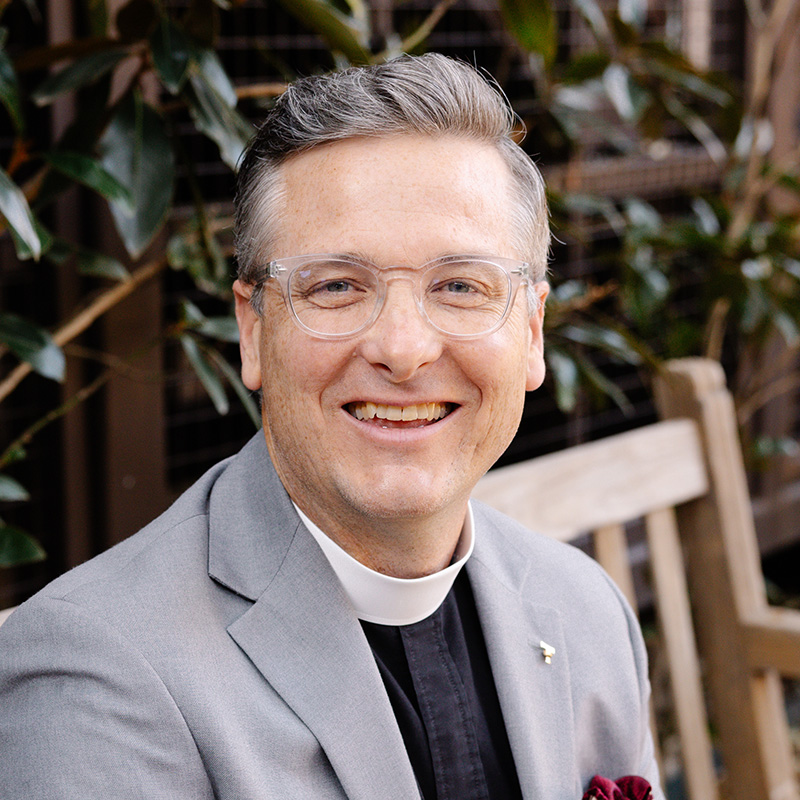
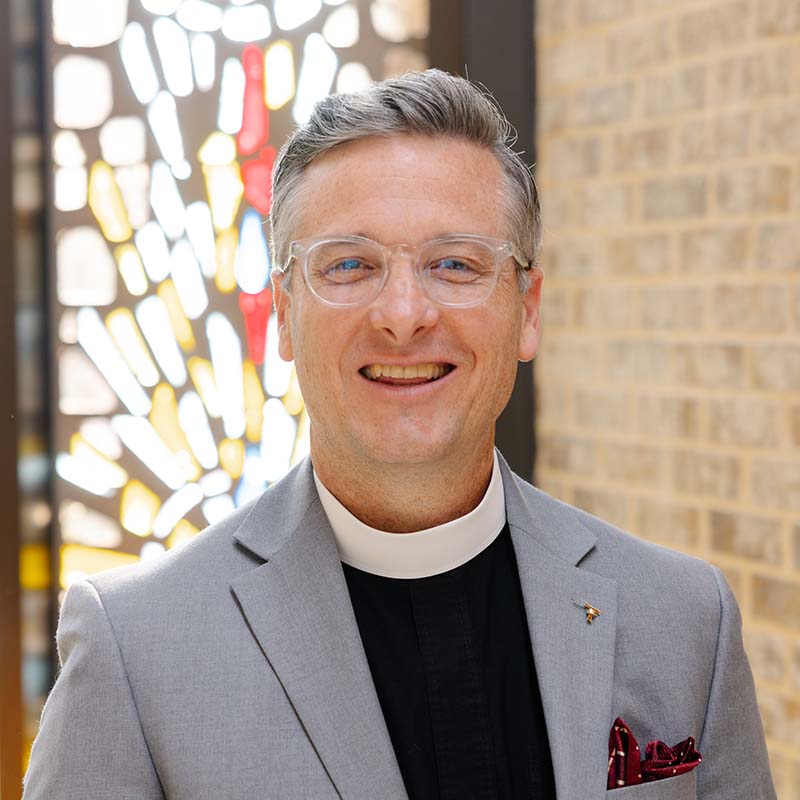
By Father Casey
This past week we held our second session of The Way – our extensive formation program for those exploring our Episcopal way of being Christian – and it is a record-breaking group. There are 41 wayfarers, which combined with the eight companions (helpers from previous years) makes for a wonderfully full room! It is exciting to see so much interest in our church, and it is a tremendous privilege to dive into deep questions of the faith with all these awesome people.
This week I introduced the idea of Anglicanism, which is the branch of the larger Christian tree to which we belong as Episcopalians. I spoke of ancient history and the spread of faith in the British isles more than 1,500 years ago. I talked about the birth of the Church of England and the creation of The Book of Common Prayer in the 16th century. And I talked about a few key historical summaries of our tradition that have been useful across the centuries – things like Richard Hooker's "three-legged stool" (scripture, tradition, and reason) and the Chicago-Lambeth Quadrilateral (see pages 876-77 of the prayer book for this deep cut).
But then I spoke more broadly about some ideas that characterize Anglicanism, and for me, the most essential characteristic of our church is our belief that two things can be true at the same time. We are a church of both/and. We see this in the 16th century, when we sought to be both catholic and protestant. We see this in our attitude toward Scripture (it is divinely inspired and also written by ordinary people). We see this in our belief about the baptized (we are saints and sinners). In countless ways, Christians in our beautiful tradition have been willing to see the truth of two things at the same time, when so many others insist on the smallness of either/or thinking.
To us, rather than making us "wishy washy" or "unwilling to choose," we celebrate our both/and approach as the best way to obey Christ. In the gospels, Jesus is repeatedly challenged to choose between two options, but time after time, he locates an option others lacked the imagination to recognize. He sees beyond a false dichotomy to find a better way. His imagination is not limited by the polarities that seem to be our "only choices," and instead he steps through the middle.
This shapes our attitudes not only toward theological matters, but also contemporary events. For example, when the subject of immigration is raised, and it is made to sound like the only choices available to our nation are open borders or the forceful eviction of everyone without full citizenship, we recognize that the better way is through both/and. Real borders and a rule of law are incredibly important, but immigrants are people, not objects, and thus deserve rights and respect. We betray our national character when we suddenly remove protected status from those here legally, as we did this week to nearly 350,000 Haitian immigrants, and the only thing we make great in such actions is our shame. We need to find a both/and approach that honors laws and human beings at the same time.
The only both/and that doesn't really work is when we profess virtue but live without it. We don't get say we believe in something and then live like it isn't true. That's the evil inverse of both/and. Saying we believe in the equal dignity and full humanity of all persons, but then turning a blind eye to the suffering of some persons because they pose complex political questions…that is not both/and, that is moral weakness.
Our gift as Christians in this moment of history is to stand on the foundation of our Anglican heritage. We need to lean into our both/and mindset to advocate for better solutions to the problems we face – as individuals and as a society. Both/and is how Jesus navigated the boobytraps of his day, and it is how we can find our way through our own minefields today.
Fr. Casey+
Previous Articles
October 2, 2026
September 25, 2026
September 18, 2026
September 11, 2026
September 4, 2026