

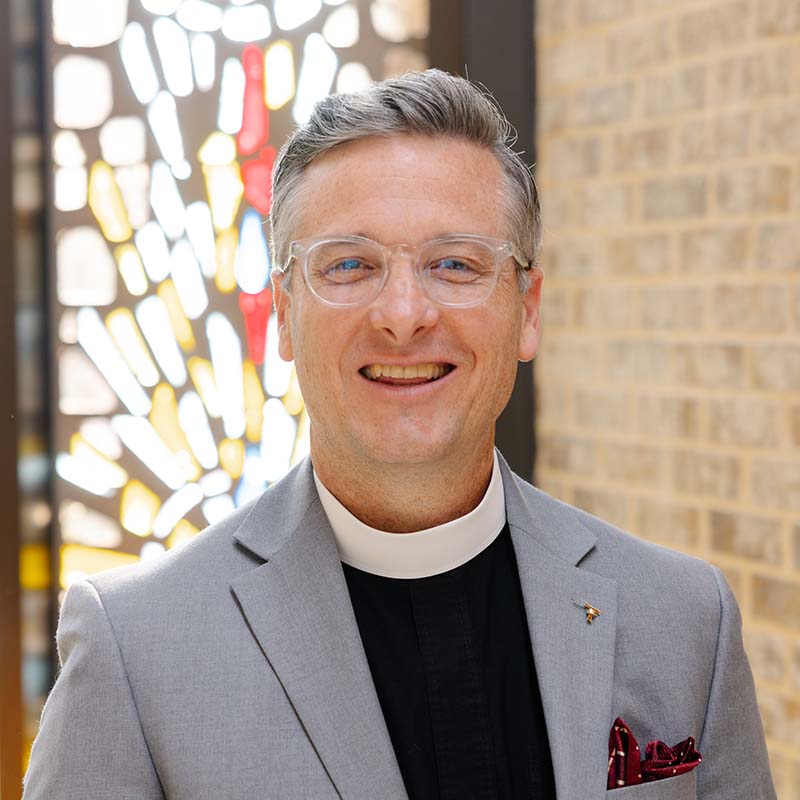
By Father Casey
August 6 is the Feast of the Transfiguration. It is also the anniversary of the atomic bomb dropped on Hiroshima in 1945. They share more than a date.
Matthew describes the Transfiguration like this: "And Jesus was transfigured before them, and his face shone like the sun (17:2)." Those who survived the atomic bomb in Hiroshima said something similar: it began with a flash brighter than the sun.
Just after the Transfiguration, Jesus descended the mountain and encountered a boy afflicted by some kind of evil power that caused him terrible suffering. Jesus had compassion for the little boy and freed him from the evil. Do you remember the name given to the bomb dropped on Hiroshima?
"Little Boy."
The bombing of Hiroshima is like a demonic parody of the Transfiguration: light that enlightens versus light that destroys, power that heals versus power that annihilates.
The atomic bomb dropped on Hiroshima was humanity's first use of a weapon like this. Of the city's population of 250,000, 70,000 are estimated to have died instantly, and 70,000 more by the end of the year. Nine out of ten doctors and nurses in the city were either killed or badly injured, and 42 of the city's 45 hospitals were destroyed, which meant that those who didn't die in the blast were left to suffer agonizing deaths without any medical care.[1]
Hiroshima had become a living hell, while on the church calendar it was the Feast of the Transfiguration.
In 1946, The New Yorker sent the journalist John Hersey to Hiroshima to report on the aftermath. Hersey wrote through the eyes of six survivors: a Catholic priest, a Methodist minister, a Red Cross worker, a private practice doctor, an office girl, and a tailor's widow.[2] Originally Hersey's essay, titled "Hiroshima," was to be published in monthly installments, but the magazine ultimately chose to dedicate an entire issue to it. It sold out in two hours. A few months later it was published as a book and sold three million copies.
The Cold War ultimately brought awareness of the destructive power of nuclear weapons, but in those early months after the end of World War II, many people were oblivious to what had happened in Japan. Hersey brought that hellscape into their living rooms. He wrote about prolonged physical suffering and horrible physical deformities. He wrote about black radioactive rain that poisoned people from above and, as they drank it, from within.
Hersey's reporting went a long way to helping Americans understand the evil that had been unleashed – and what other word could describe it? How much it shortened the war, how many lives were possibly spared by avoiding an invasion, all that can be debated. But what cannot be debated is the way we had exponentially expanded our power to kill.
And yet we were able to argue ourselves into defending it. Americans made a quick kind of peace with this annihilating power, and soon we had a stockpile of nuclear weapons sufficient to destroy the world many times over. Supporters included many Christians, who not only defended the atomic bombing of Japan but also advocated wider nuclear armament. History is tragically filled with examples of Christians who turned a blind eye to the evils that were convenient to them. The Bible, after all, can be used to endorse just about anything.
But the light that is brighter than the sun that saves the world is not the light that blazed over Hiroshima. It is not the light that flashes at each explosion in all the wars we wage to "bring peace." The light that saves the world is the one who was transfigured on the mountain. He is the one about whom the voice of God said, "This is my beloved Son in whom I am well pleased; listen to him!"
Because, as my friend Brian Zahnd is fond of saying, "Jesus is what God has to say."
Governments may turn to weapons to solve problems, but Jesus is what God has to say. Biblicists may find no shortage of verses to justify violence, but Jesus is what God has to say. Dispensationalists may be obsessed with war as a way to bring the "end times," but Jesus is what God has to say.
And what does Jesus say? He says, "Love your enemies! Do good to those who hate you. Bless those who curse you. Pray for those who hurt you. Love your enemies! Do good to them…then your reward from heaven will be very great. You will be acting like children of the Most High. For he is kind to the ungrateful and the evil. Be merciful, just as your Father is merciful (Luke 6:27–28; 35–36)."
The Transfiguration and the anti-Transfiguration, remembered on the same day.
By which light will we live?
[1] https://circulatingnow.nlm.nih.gov/2024/08/08/a-photographic-view-into-the-medical-response-at-hiroshima/
[2] https://www.newyorker.com/magazine/1946/08/31/hiroshima
Previous Articles

October 2, 2026
September 25, 2026
September 18, 2026
September 11, 2026
September 4, 2026