

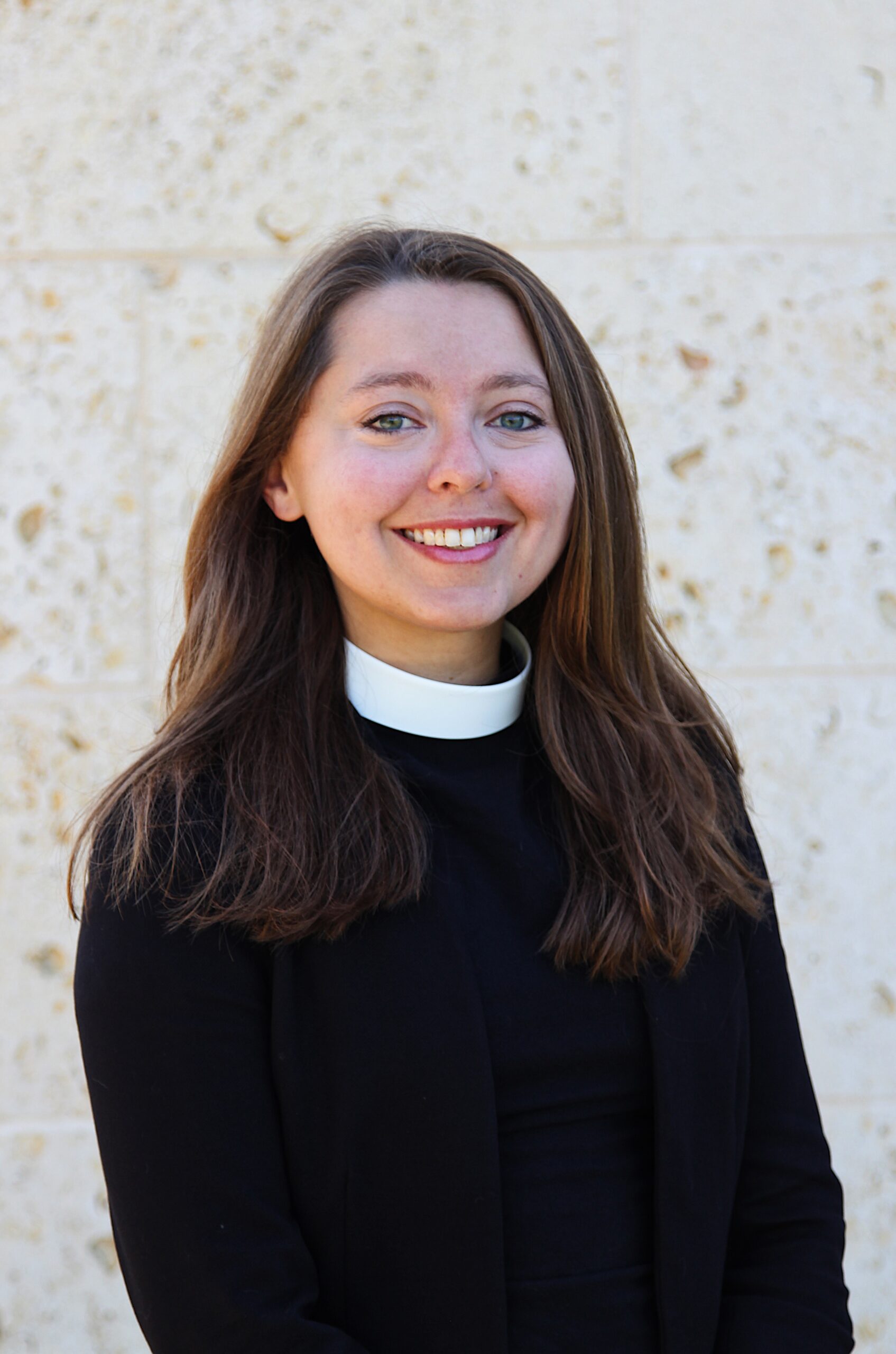
By Mother Maddie
As a teenager, I was almost kicked out of confirmation class. For most of my adolescence (and into my early adulthood), I had a problem with the custody of my tongue. I said whatever I liked to whomever I liked, so filled with intense feeling that I was unable to keep my opinions to myself. Maturation has been, for me, a journey of learning when to remain silent and how to speak my mind gently.
On the morning in question, I was sitting with other 7th and 8th graders in the undercroft of an Episcopal parish in Fort Worth. We were arranged in neat and orderly rows, facing the zealous curate who would help to rend the church in schism in just a year. With his usual bravado, he proclaimed, "If you are not a baptized Christian, you will burn in hell." With Bible in hand, he opened to read a portion of John's Gospel which we will hear on Sunday morning: "I am the way, and the truth, and the life; no one comes to the Father, but by me."
The moment he finished speaking, I stood from my seat. I remember my cheeks burning red. I told him that my dear friend Rachel was Jewish. She loved God. She lived well and with kindness. How could God send her to hell? "That doesn't sound like a loving God to me!" I protested.
I remember him reading John 3:16 to me and asking me to sit down and be quiet. Later that week, he asked the rector to remove me from the class. "She's asking questions which are causing the others to stumble." The rector told him to let me be. "She's doing fine."
This is a struggle with which most of us are familiar. The God we meet in Jesus Christ is gentle and lowly and kind. He abounds with forgiveness and mercy, reaching out to the least of these – the poor, the prostitutes, the faithless, the sinful – in order to love them well. This is the God we meet in the Eucharist, who humbles himself to dwell in ordinary bread and wine, in order to abide in us. And, this is the God we pray you encounter at church, in a joyful community of love and service. And yet, how do we understand these passages in which it sounds like Jesus is creating a system of exclusion? How do we read them faithfully?
Whenever you encounter difficult passages like this, remember three things:
First, whenever we read the Bible, we bring all kinds of baggage with us. We carry every exclusionary word, every verse painted in judgment on a billboard, every troubling sermon, in our hearts. They color our perception. Whenever we open the Bible, we must work to let those voices go and read God's word with fresh eyes. This is the first step to faithful interpretation.
Second, reading is an interpretive act. It is impossible to read words on a page without interpreting them. To read is to make meaning of words on a page. Every human being who has read Holy Scripture over these many thousands of years has engaged in the act of interpretation. The Bible – like the newspaper, like poetry – requires interpretation.
Third, whenever you read Scripture, you have a helper. Jesus Christ is the self-revelation of God. Throughout the Hebrew Bible, we watch as the people of God struggle to understand the character of Yahweh. They mistake him to be a wrathful and vengeful and jealous God. But Jesus comes to correct all that! If you want to know the character of God, look to Jesus. In all four Gospels, we learn that Jesus is love incarnate. That love is strange and surprising, but it is love nonetheless. And so we are to read the Bible through the lens of Jesus, through the lens of love. We begin this work by asking ourselves, "What is the most loving interpretation of this passage?"
Here is my answer to that question: When Jesus says he is the only way to the Father, he is right! Without the life, death, and resurrection of Jesus, we could not experience everlasting life with God. Because of Christ, death has become a door to a new way of living. But who is that new way of living for? Well, Jesus says that whoever believes in him will have eternal life. Does he say whoever believes in him before they die? No. If we truly believe in the power of the cross, then we trust that life no longer ends in death. And so, because of Jesus, we have been given the gift of all time and eternity to come to faith in God. We don't need to have it all figured out right now. God gives us all the time we need.
That sounds more like the work of a loving God to me.
To be fair, the young priest who taught my confirmation class all those years ago was a man of deep faith. He truly believed that our salvation depended upon our whole-hearted belief in the risen Lord. He thought he was saving our souls from damnation. Voices like his have long dominated the American Christian conversation. I wonder how we might join that conversation in love and faith with gentle compassion.
Mtr. Maddie
Previous Articles

October 14, 2026

October 8, 2026

October 2, 2026

September 25, 2026
September 18, 2026