

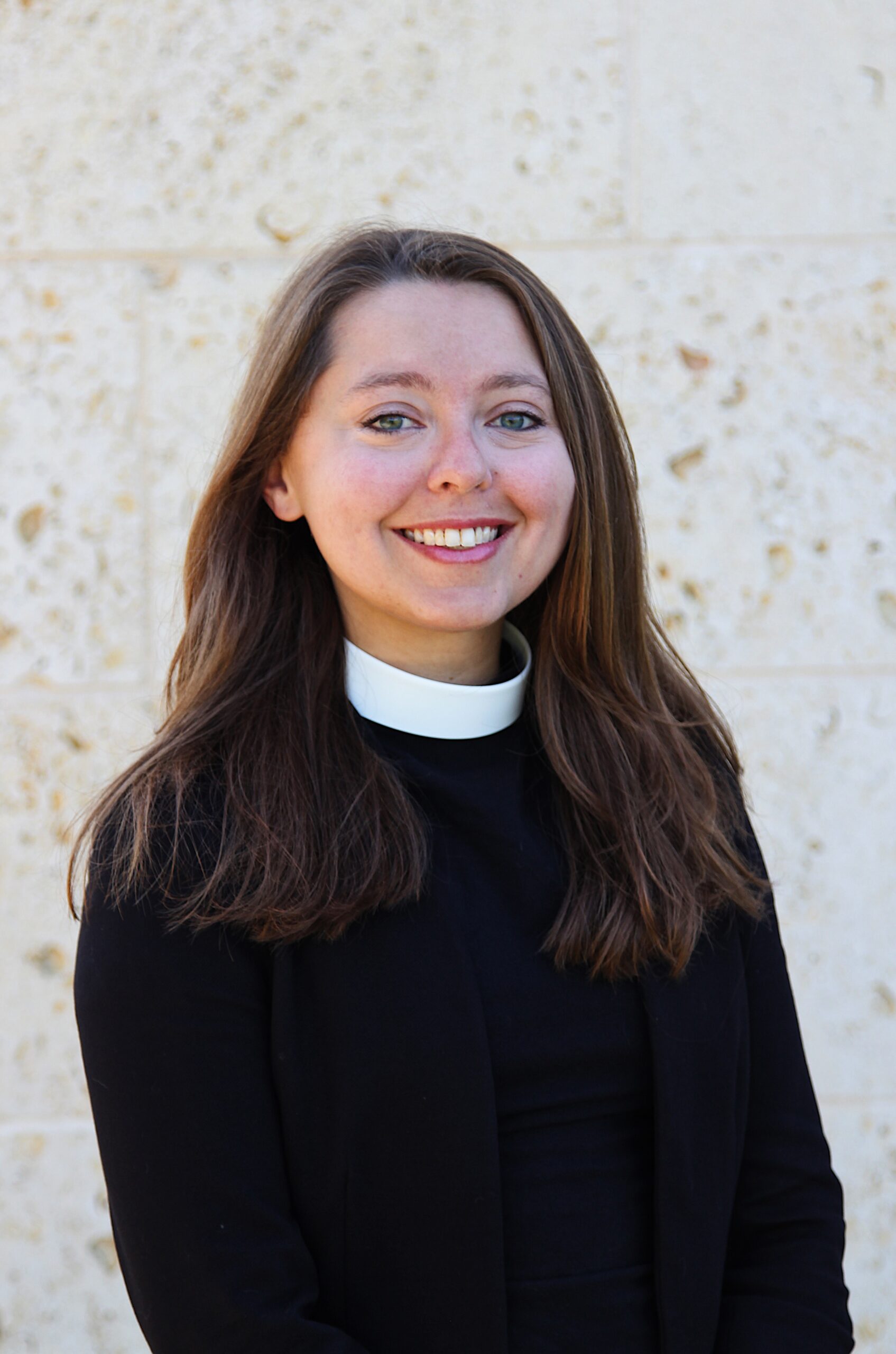
By Mother Maddie
Before I was a priest, I studied playwrighting and acting. I lived in New York City on Avenue C in an apartment so small it brought tears to my mother's eyes. For the first two years of our training, we were sorted into studios (like Hogwarts Houses) each of which operated under a unique school of thought. I was assigned to study the Meisner Technique. I had no idea what lay ahead.
For the first year, we were denied the security of a character to play or a script to bring to life. We were, instead, to play only ourselves in imaginary circumstances. Your mother has died, your sister is getting married, your boyfriend has betrayed you. The goal of the exercise was to unlock your own desolation, your own anxiety, your own thrill – to find the emotional colors with which you might paint. Your heart and your mind were your only tools. But to use them, you had to set them free.
Most of us don't live like this, and for good reason. After every heartbreak, we work to save ourselves from experiencing pain like that again. We build up walls, scar tissue grows. Fear and prejudice and anger form an armor around our hearts. Sometimes, that armor can disfigure us. Sometimes, it can lead us to act in ways we never dreamed we would.
But the job of the actor is to see beyond the armor to the beating human heart beneath. This is the job of the Christian, too. It is the empathy to which we are called. God charges us to see one another with heavenly eyes. For no matter who we are, no matter what we have done, no matter the scar tissue which obscures the Light shining in our lives, we are simply human beings – sheep of God's own fold, lambs of God's own flock, sinners of God's own redeeming. Behind every heinous act, every hateful word, every horrible divide is a human heart, aching to be loved. Remembering that simple fact is the beginning of our healing.
But it is hard to see one another with heavenly eyes. Whenever tragedy strikes and our world is bound up in turmoil, we want to sort those involved into two groups: good people and bad people, the righteous and evil, the victim and the aggressor. This kind of thinking only protects us from the vulnerable work of empathy. It casts a shadow over the Light in us.
Perhaps we might begin by looking at our neighbors the way an actor looks at a character – not with judgments, but with curiosity – wondering what brought them to this moment, who taught them to protect themselves like this, of what they are truly afraid. Judgment ends a relationship. Curiosity opens the door to the possibility of reconciliation and restoration. If you see those you have been taught to hate with curiosity, you will find in their eyes someone remarkably familiar… someone seeking truth, protecting their heart, working for what they think is right – just like you.
At the end of the hall in my studio at NYU, there was a mural painted by a former student. In grays and greens and blues, a man faced away from us toward a light shining on stage. Below him were Samuel Beckett's famous words which our professors repeated often, "Ever tried, ever fail. No matter. Fail, fail again, fail better." A mantra for an artist, and a mantra for the Christian. Fail, fail again, fail better.
True compassion, true charity, truly seeking Christ in all people are tasks we are certain to fail on this side of the grave. The work of the Christian is an art, which always strives for perfection, but is certain to fall short. Thanks be to God, he doesn't expect us to find perfection. He only asks us to do the very best we can, to fail a little better each time, moving ever closer to the very heart of God.
Mtr. Maddie
Previous Articles
February 19, 2026
February 13, 2026
February 6, 2026
January 23, 2026
January 16, 2026