

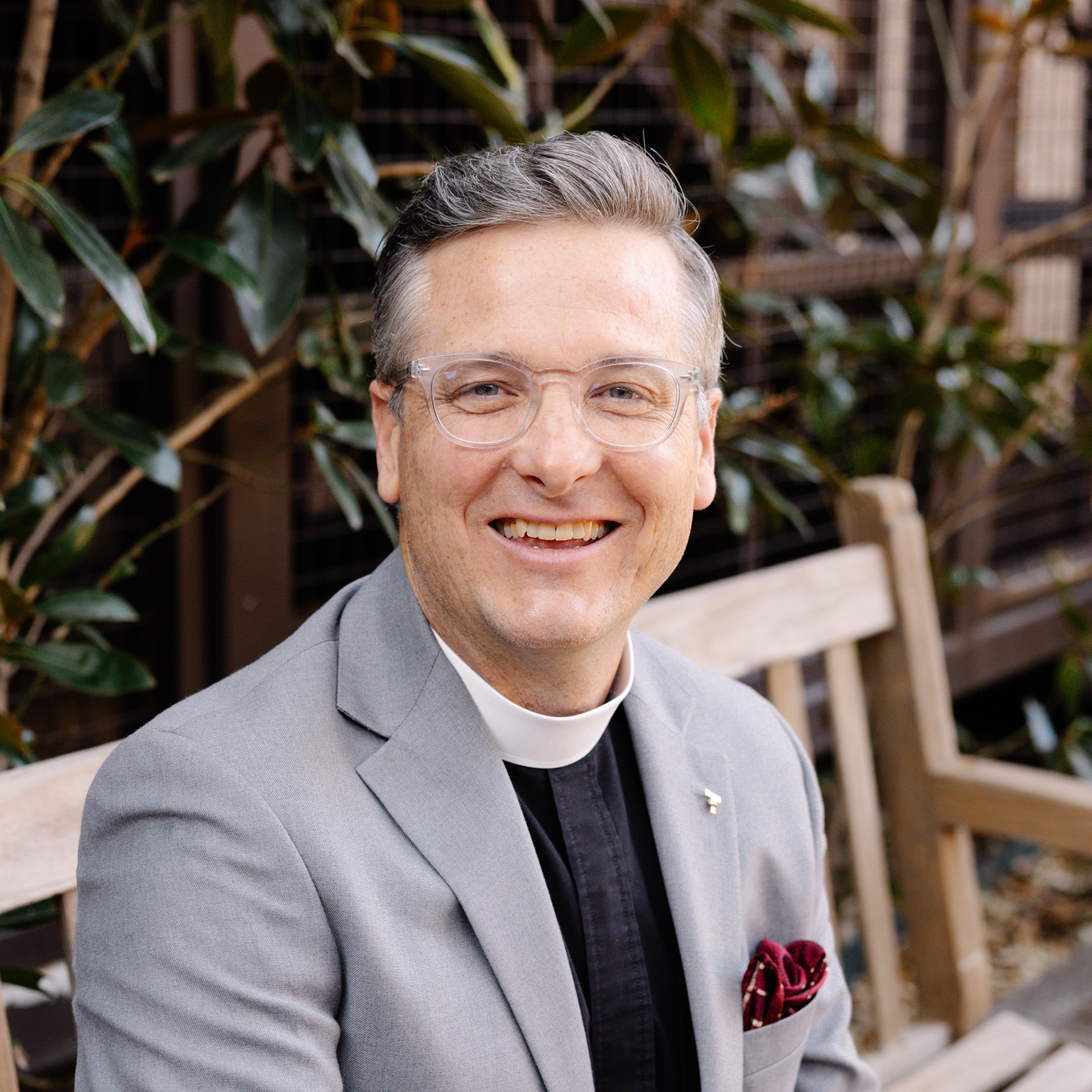
By Father Casey
It takes courage to read the news these days. The stories and images of the devastation caused by Hurricane Helene are hard to fathom. One year after the terror attacks in Israel and a regional conflagration, if not all-out world war, is a terrifying possibility. The horrors of Russia's invasion of Ukraine continue, and out of sight of most of the world, a civil war in the Sudans is displacing millions and may cause the largest famine of the 21st century. And then, to top it all off, we have the final month of the election cycle, with all the anxiety and hostility that our national politics generates.
At least one of these stories was mentioned in most of my conversations at church this week. It is heavy to talk about hard things so often, but it's a holy sort of weight. I'm proud to be part of a congregation filled with people who care, who are affected by the suffering of people they will never meet in places they will likely never visit. I am inspired by your empathy and compassion. It means we have not allowed cynicism to harden our hearts. We have not buried our heads in the sand, or decided to stop caring so we won't have to hurt inside.
But it is a lot to hold on to, and it would be foolish to pretend we can carry all this grief and worry around without despair eventually taking hold. Which is why I'm so grateful for the arrival of October 4, and the Church's annual commemoration of Il Poverello, Francesco d'Assisi. Like many churches around the world, we will honor this remarkable man with the beloved tradition of blessing pets, but we would be wise to embrace even more than his love of animals.
Frankly, he has a lot to teach us right now as we gaze out at a world on fire and wonder how we are to live. For Francis lived in times much like these. The early 13th century was a deeply divided time, when neighbors didn't trust neighbors and resentments between political blocks festered. It was a time of economic uncertainty and swelling poverty. It was a time of scandals in the church and government, and growing distrust of leaders. It was a time of war in the Middle East, when powerful people decided that peace was only possible after the total eradication of their enemies.
Sound at all familiar?
We still remember Francis 800 years later not because he solved any of those problems, but because of the way he lived in the face of them. His commitment to seeking and serving Christ in all persons, his friendship toward all and refusal to have enemies, his compassionate alignment with the poor and suffering, his radical humility and childlike joy …it provides us with a template for how we, too, could respond to the suffering of our world. Francis knew the only way to heal a world in the throes of sin-sickness is by using the most powerful force in creation: love. And each of us is able to wield this mighty power with the person right in front of us – when we choose to love them truly, generously, sacrificially. And one by one, all those little drips of loving interactions accumulate into a wave of righteousness that can quench the fires burning around us.
Francis didn't stop the crusade in Egypt, or transform medieval economics, or discover a cure for any of the dreadful diseases of his day. But what he did was every bit as powerful at healing the world and bringing the Kingdom of God nearer. We sometimes think that it takes a president, or general, or billionaire to do great things or change the world. But Francis patterned his life on that of our Savior, who revealed the divine power of a single life lived sacrificially. After all, we don't remember the popes or kings or warriors of that age, but we remember "God's Fool," who loved so hard and so well that he changed the course of history.
I've always loved how John Wesley, another great saint, put it: "Do all the good you can, by all the means you can, in all the ways you can, in all the places you can, at all the times you can, to all the people you can, as long as ever you can." That is what is ours to do, in good times and bad. That's how we are to live in response to the news. That's what it looks like to be salt and light.
Fr. Casey +
Previous Articles
September 25, 2026
September 18, 2026
September 11, 2026
September 4, 2026
August 21, 2026