

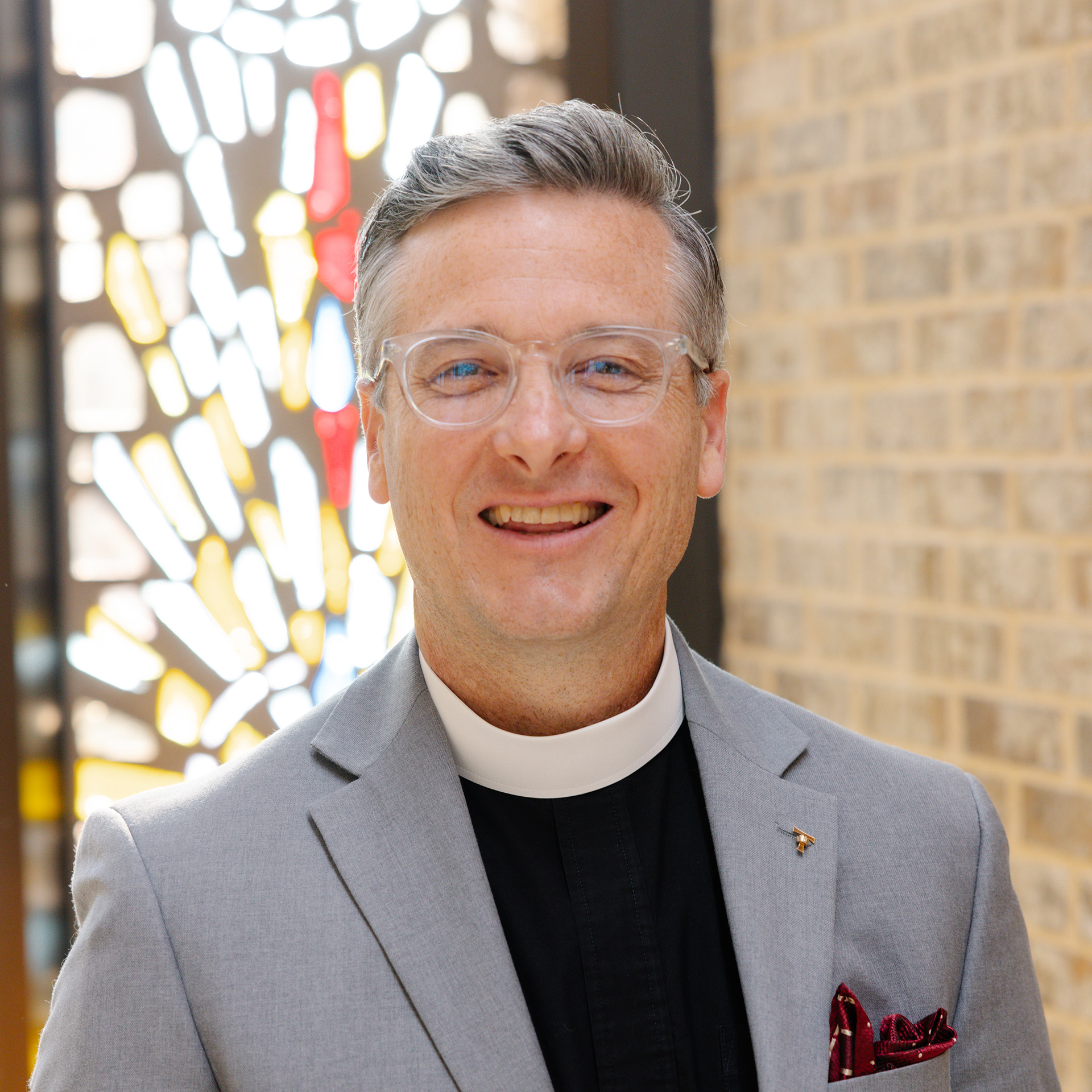
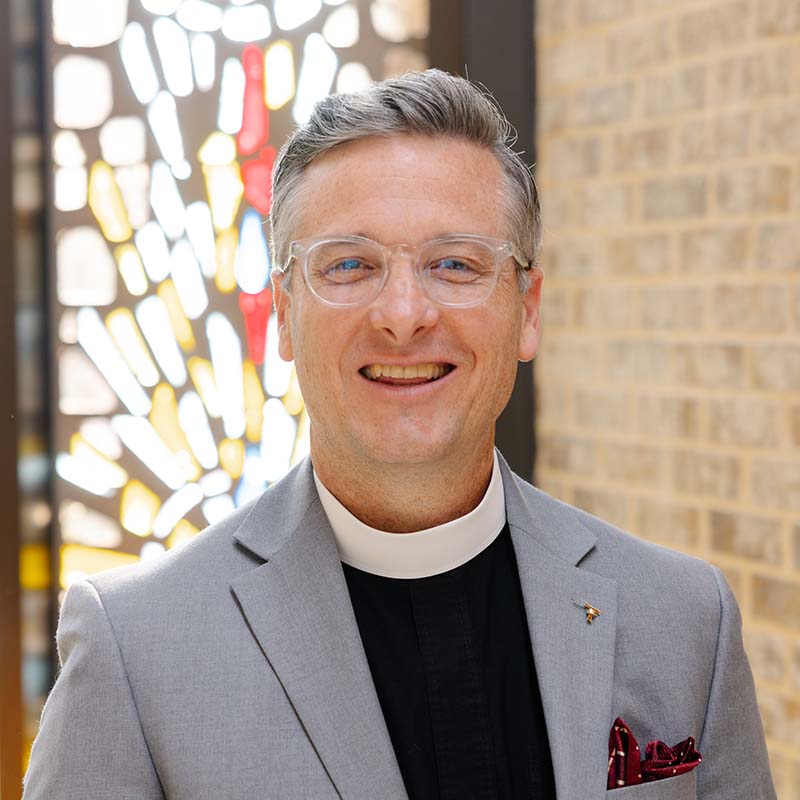
By Father Casey
Once again this year we are stretching our observance of Advent beyond the traditional four weeks to nearly 40 days. We choose to do this because the themes of the season – waiting, hoping, persevering, turning – deserve more time and attention. In truth I feel like the world is always in Advent: heaven has already come down to earth at the Incarnation, but our weak and weary world is still waiting for the full inbreaking of the glory of God.
Hopefully you've received a brochure from the church in the mail, and when you do you may have the same response that a nameless someone on staff did when he saw it for the first time: "Well, that's weird." The cover features swirling clouds in a night sky, pierced by a single star. In the midst of an ominous darkness, light shines.
I'll admit that it's not your typical holiday imagery – there isn't a "gloomy" section in the Christmas décor aisle at Michael's – but then we're not promoting commercial Christmas and trying to sell you on sentimentality. We're trying to be honest.
In Advent we admit that, in spite of the pervasive onslaught of holiday cheer, everything is not alright. Sin clings tightly to the world, and we see its tendrils in too many places. Meanwhile the solutions marketed to us by politicians, advertisers, and influencers are not remotely adequate. They are good at distracting us from our problems for a time (they're also good at inventing new ones), but what we truly long for is for God to "tear open the heavens and come down." That's how the prophet Isaiah puts it (64:1), and that's an Advent prayer if ever there was one.
Frankly, the Hebrew prophets may be our best teachers in Advent, and it's why we'll be paying special attention to them the next several weeks. The prophets are brutally honest about the presence of sin, evil, and death in the world, and yet they also stubbornly cling to hope. They acknowledge the darkness, but they also understand that the gloom is merely obstructing the light above. High beyond the clouds shine the stars.
It reminds me of a scene from The Return of the King, the final volume in The Lord of the Rings. Frodo and Sam have journeyed into the heart of the enemy's realm, Mordor, carrying the ring of power. They are at the foot of Mount Doom but struggling to complete their quest. The weight of their burden is so great that it is hard to take another step. Despair threatens to swallow them, and all hope seems lost in shadow. Until Sam looks up.
"There, peeping among the cloud-wrack above a dark tor high up in the mountains, Sam saw a white star twinkle for a while. The beauty of it smote his heart, as he looked up out of the forsaken land, and hope returned to him. For like a shaft, clear and cold, the thought pierced him that in the end the Shadow was only a small and passing thing: there was light and high beauty forever beyond its reach."
Advent is a summons to both: to honesty and hope. To acknowledgment of the dark, and remembrance of the light. To gaze at the Shadow, and know it to be but a small and passing thing. For behind it, above, it, beyond it is light and beauty forever beyond its reach.
Previous Articles
October 2, 2026
September 25, 2026
September 18, 2026
September 11, 2026
September 4, 2026